Shear Wave Acoustic Emission Sensors

Shear Wave Acoustic Emission Sensors

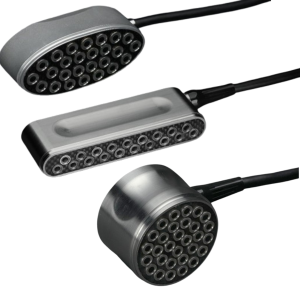
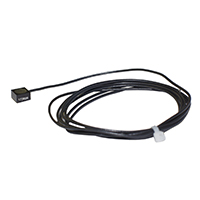
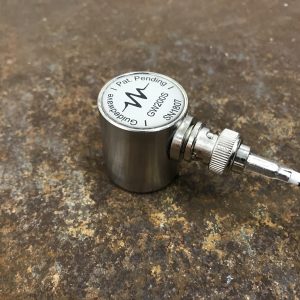
Guidedwave has developed a patent-pending1 omnidirectional shear wave acoustic emission (AE) sensor. This sensor is unique in its ability to detect shear wave energy from all directions, allowing use for generalized AE inspection problems on plates, shells, and other structures. This is a significant advancement over previously developed shear wave AE sensors, which are highly directional, and therefore useful for location analysis on non-bar geometries.

AE events generate both Lamb-type and shear horizontal-type guided ultrasonic wave content. Conventional AE sensors in use today only detect Lamb-type wave content, leaving the information contained within the shear waves undetected and unanalyzed. Use of Guidedwave’s shear AE sensors can provide a variety of benefits, including:

  • Higher accuracy during source location analysis. The shear velocity is used, avoiding confusion, user error, and error from triggering off of multiple different Lamb wave modes that travel at different velocities. The fundamental shear horizontal guided wave always travels at the same velocity, the bulk wave shear velocity, regardless of structure thickness or frequency.
  • Lower sensitivity to environmental noise. Rain and wind-blown particles primarily excite Lamb wave content. This allows Guidedwave’s shear AE sensors to be largely immune to rain noise.
  • Active/passive testing. The element was designed as a sender as well as a receiver. This allows for both passive AE testing and active guided wave testing.
  • Source type identification. Based on the different mode type content received by the sensors, additional source information can be obtained. This is useful for advanced users and research scientists.

Sensors are available with or without an integrated preamplifier and in several frequency configurations. Contact us for additional information.


1 J. Philtron, C. Borigo, S. Owens, and R. Love, “Shear wave sensors for acoustic emission and hybrid guided wave testing,” U.S. Patent Appln. 15/715,276.

Learn More
Long-Range Pipe Piezoelectric Collars

Long-Range Pipe Piezoelectric Collars

UltraWave piezoelectric pipe inspection collars are designed to be used in conjunction with the UltraWave LRT acquisition unit and software. These collars offer a low-profile, lightweight, ruggedized option for low-frequency, long-range pipe inspection with torsional guided waves. They have an operating frequency range of 15 to 85 kHz and are available in standard pipe sizes from 2″ to 36″ with custom options available for any pipe size.

Advantages

  • Low-profile and short axial-length design for tight access scenarios
  • Lightweight, flexible collars for easy transportation and assembly
  • Completely sealed modules for improved reliability
  • Stainless steel face plates for improved durability
  • Frequency range 15 kHz to 85 kHz
  • Color-coded cables and bands for easy wiring
  • Kevlar reinforced bladders with easy to install buckle

For more information on the UltraWave LRT piezoelectric collars and the UltraWave system, please visit Olympus’ product page here.

Learn More

Long-Range Pipe Magnetostrictive Collars

Long-Range Pipe Magnetostrictive Collars

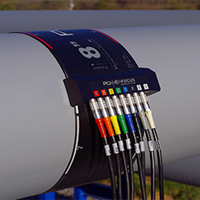
PowerFocus magnetostrictive collars offer an alternative to traditional piezoelectric collars for long-range pipe inspection. The PowerFocus collars can be operated with Olympus’ UltraWave LRT platform and software to perform inspection via magnetostrictive means. These collars are extremely low profile compared to piezoelectric collars and are segmented, which means they can be used to do both active and synthetic focusing. PowerFocus collars are also available in permanent-mount configurations for both below- and above-ground monitoring applications. Collars are available in multiple center frequencies and pipe diameters to suit various applications.

Advantages

  • Extremely low-profile
  • Designs available for permanent-mount health monitoring
  • Lightweight, flexible collars
  • Can be used to do active and synthetic focusing
  • Operated with the UltraWave LRT platform and software

To learn more about the Olympus UltraWave LRT system used to operate the PowerFocus collars, please visit Olympus’ product page here.

Learn More

Guided Wave Phased Array Probes

Guided Wave Phased Array Probes

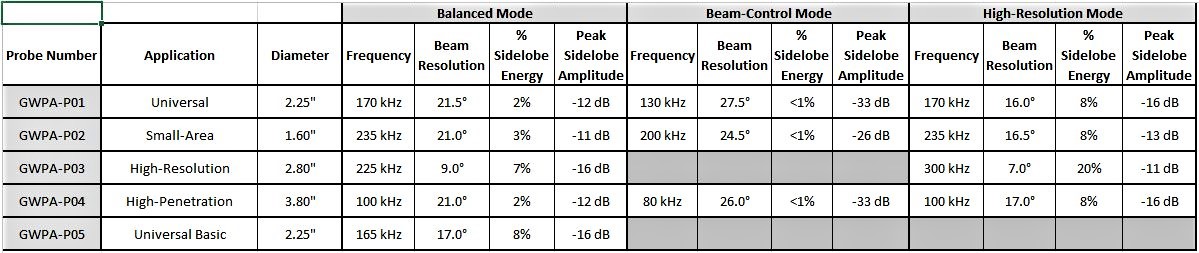
The GWPATM probes utilize phased array beam steering technology to focus ultrasonic guided wave energy away from the probe and sweep this beam 360° to generate a guided wave sector scan (GS-scan). The GS-scan, which is collected and displayed in a matter of seconds, displays information on the location and extent of any flaws in the test area that reflected ultrasonic energy back to the probe. The guided wave beam steering is accomplished by utilizing an array of highly specialized guided wave sensor elements arranged in a GWPATM probe coupled with a powerful tone-burst guided wave pulser/receiver system and advanced signal processing algorithms.

Combining the GWPATM probes with a dry coupling membrane and pressure coupling device allows for robotic deployment for difficult-to-access areas including structures at height, inaccessible areas, and in-service structures. Robotic GWPATM data collection makes the most of this revolutionary technology.

Advantages

  • Small footprint
  • Large-area coverage from a single position
  • Insensitive to liquid loading on the surface of the structure
  • Capable of detecting far-side corrosion


Learn More

Medium-Range Magnetostrictive Pipe Scanner

Medium-Range Magnetostrictive Pipe Scanner

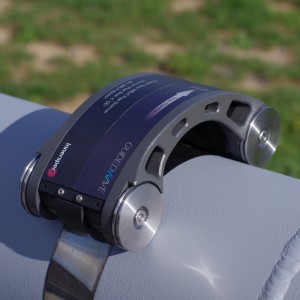
The guided wave MRUT system is suitable for medium-range (~10 ft. or less) inspection of pipes 4” or larger.  The probe is used in conjunction with the Innerspec PowerBox H and specialty software to inspect supports, elbows, ground penetrations and short runs of pipe. The system uses proprietary software to generate C-scan like images of the pipe from a remote location. The probe is operated by the user scanning the probe around the circumference of the pipe. As the user does this, the probe sends a series of guided waves along the axis of the pipe and generates a defect colormap of the area several feet in front of the probe.

Advantages

  • Rapid assessment of large areas from a single position
  • Detection of wall loss under supports or insulation
  • Not sensitive to liquids in the pipe
  • Probe uses magnetic wheels to maintain contact with the pipe
  • Single probe accommodates pipe sizes 4” and above
Learn More

Custom Magnetostrictive Probes

Custom Magnetostrictive Probes

Guidedwave can develop custom magnetostrictive probes for any application. We offer probes for single-element pulse-echo and through-transmission applications, as well as focused arrays and multi-element arrays for focusing. We also have experience with packaging arrays for various environments. Magnetostrictive probes offer an excellent solution for inspection and health monitoring with guided waves. They can be more cost-effective and provide better mode control and signal-to-noise ratios than other guided wave probes.

Advantages

  • Low-profile
  • Cost-effective
  • Excellent mode control
  • Multi-element arrays and curved arrays available for focusing
Learn More

Piezo SHM Probes

Piezo SHM Probes

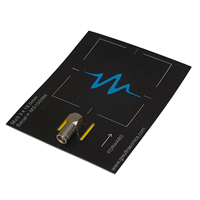
For use in tomographic monitoring and also single- and dual-element applications. Guidedwave produces a wide range of piezoelectric sensors designed specifically for guided wave health monitoring. Thin plate shear sensors are available for aircraft monitoring applications and larger sensors are also available for tank floor monitoring or similar applications. Sensors are optimized for penetration power and to have minimal damping and a short dead zone like traditional bulk wave UT transducers. Sensors can be purchased in single elements or pre-configured arrays.

Learn More

Guided Wave Angle Beam Probes

Guided Wave Angle Beam Probes

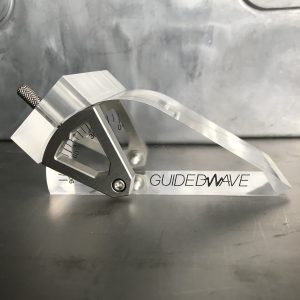
Guidedwave offers a complete range of acrylic angle beam wedges and accompanying transducers for ultrasonic guided wave applications in plates, rails, pipes, and more. Angle beam wedges take advantage of Snell’s law to control the mode and direction of guided wave excitation. Guidedwave engineers can help you in selecting the appropriate angle beam probe to meet your needs.

Available angle beam probe designs include:

  • Fixed angle wedges
  • Variable angle wedges
  • Flat-bottom wedges for plates
  • Contoured wedges for pipes, rails, and specialty application
  • Accompanying transducers available across a wide range of frequencies and bandwidths
Learn More