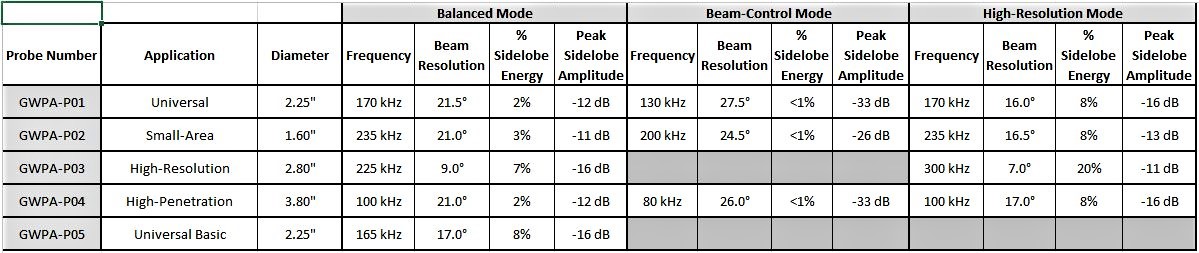
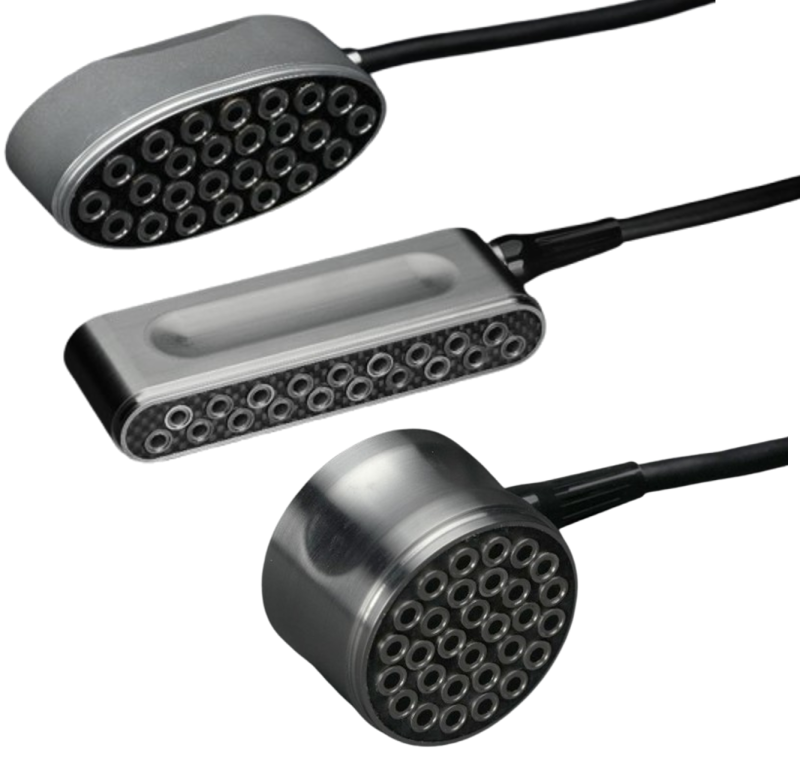
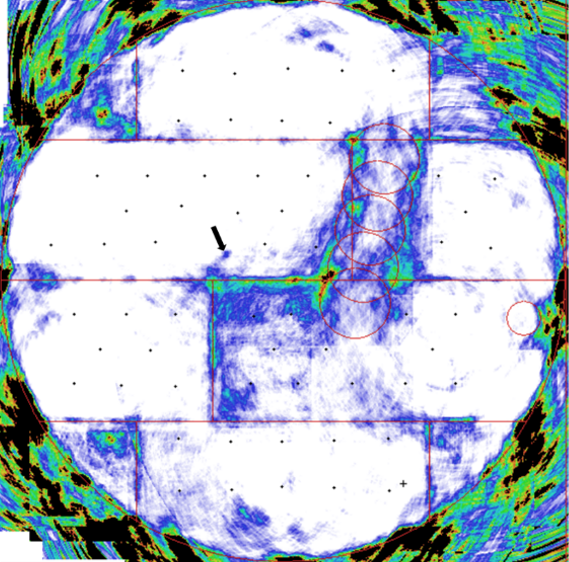
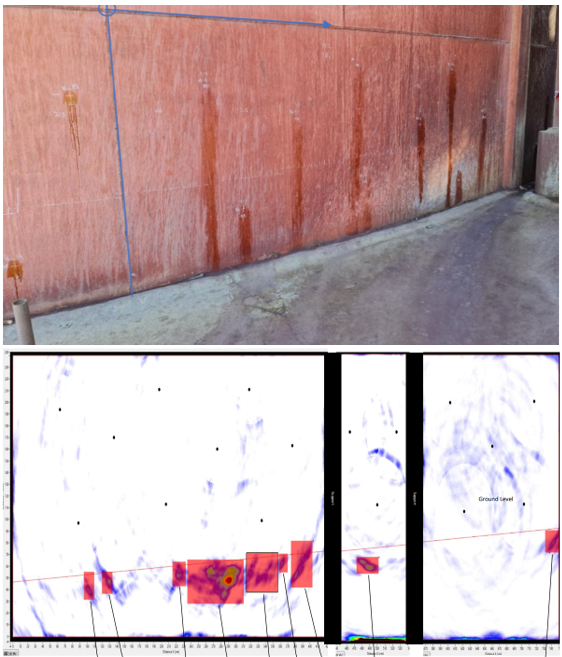
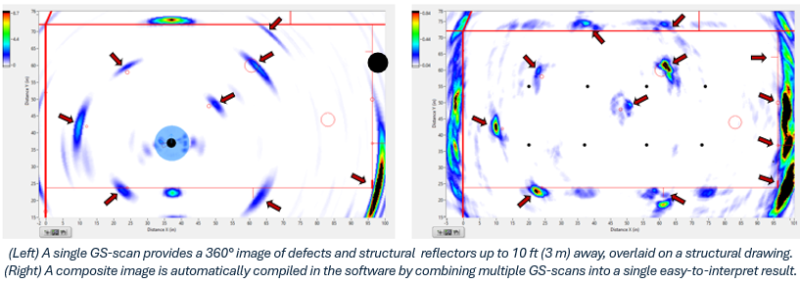
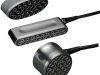
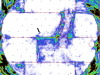
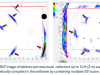
The GWPATM probes utilize phased array beam steering technology to focus ultrasonic guided wave energy away from the probe and sweep this beam 360° to generate a guided wave sector scan (GS-scan). The GS-scan, which is collected and displayed in a matter of seconds, displays information on the location and extent of any flaws in the test area that reflected ultrasonic energy back to the probe. The guided wave beam steering is accomplished by utilizing an array of highly specialized guided wave sensor elements arranged in a GWPATM probe coupled with a powerful tone-burst guided wave pulser/receiver system and advanced signal processing algorithms.
Combining the GWPATM probes with a dry coupling membrane and pressure coupling device allows for robotic deployment for difficult-to-access areas including structures at height, inaccessible areas, and in-service structures. Robotic GWPATM data collection makes the most of this revolutionary technology.
Advantages
- Small footprint
- Large-area coverage from a single position
- Insensitive to liquid loading on the surface of the structure
- Capable of detecting far-side corrosion